
A Fish Outta Wahduh
Feeling your foreignness when you return “home” and being able to laugh about it

There is a strange moment that happens when you return to the place you once called home: everything looks familiar, yet somehow you feel like the tourist. You know where the grocery store is, how the streets are laid out—and yet you feel like you’re moving in a bubble while everyone is talking like a Charlie Brown schoolteacher.
Expats and immigrants alike are often asked, “How does it feel to go back home?” (Home being wherever you are originally from.) Over the past four months of travel, that question has popped up more often than spring weeds in the garden. And although there have been nine trips back to the USA since starting this journey eight years ago, this visit was surreal because it was the final unplug. An odd feeling of familiarity, yet not belonging. Knowing where to find the best bagel, yet realizing it’s no longer your town. Subtle cultural differences surfaced daily, along with a few glaring, in-your-face differences.
I have slowed down. I walk slower. Meals are slower. It happened four times: while dining with friends or family, there came the moment of looking around the table to discover everyone else was finished, the bill was already on the table, and the waitress was asking whether we’d like to-go boxes. Meanwhile, dinner was still being methodically savored by this little traveler. I have more flexibility with mishaps. And yes, time has become more fluid with the ever-popular European 15-minute buffer.
One day there was a Walmart run to secure two sturdy plastic totes for hauling some personal effects back to Portugal, then France. Happy with my purchase, I wheeled the behemoth cart toward the exit door when a kindly lady wearing a vibrant green Walmart safety vest stepped forward, extended her hand, and said, “Do you have your receipt, please?” Without pausing, an enthusiastic “Oh, yes, I do. Thank you for asking” fell out of my mouth. It wasn’t until halfway across the five-acre parking lot that the realization arrived: in the States, some stores ask to confirm your purchase by checking your receipt. I had to laugh as I had completely forgotten about this cultural difference. So, next time you’re in Walmart Reno, Nevada, and encounter a snarky little old lady guard at the door, you can blame me. Apparently, it’s possible to escape with two plastic totes and one’s dignity.
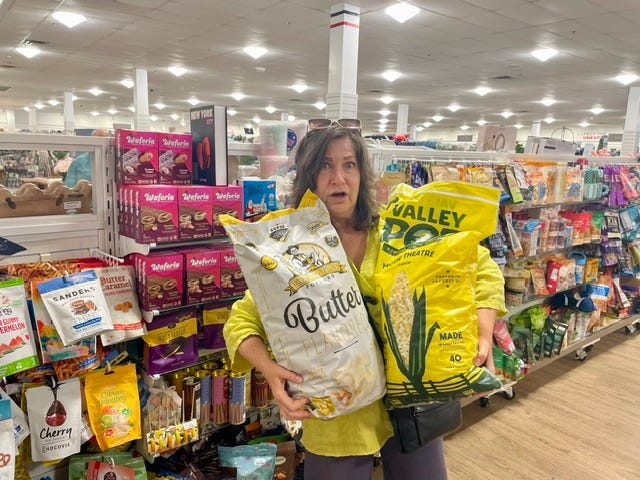
Consumerism and the disposable nature of American life were also much more conspicuous on this trip, including these mega-bags of “snacks” at TJ Maxx. In Europe, these two bags would likely be met with blank stares. Locals might poke at them as if they were about to explode. Speaking of shopping, there was also a certain delight in the extreme temperature-controlled environment. Public spaces greeted me with that slap-your-face arctic wave. It’s considerably easier to try on a blouse without sweat rolling down your backside. Now that I’m back in Portugal for its final unplug, we are in a heat wave. As I write, it’s already 92 degrees (33.33333 to all my metric immigrant comrades), and today’s pending errands will almost certainly result in sweating more than a Bikram Yoga retreat.
In Portugal, restaurants, banks, and professional buildings require a willingness to negotiate with the weather. Even when there is some A/C, it is used sparingly—to take the edge off, not turn the building into a winter wonderland. So you sweat through lunch and peel your legs off the hard plastic chairs, while the seafood is fresh and the wine chilled and light. Speaking of wine, a happy hour in Portugal can score you a Portuguese pour nearly to the brim for a whopping 2 euros. On this visit to the States, the happy-hour house wine barely covered the bottom of the glass for ten bucks, which was almost comical.
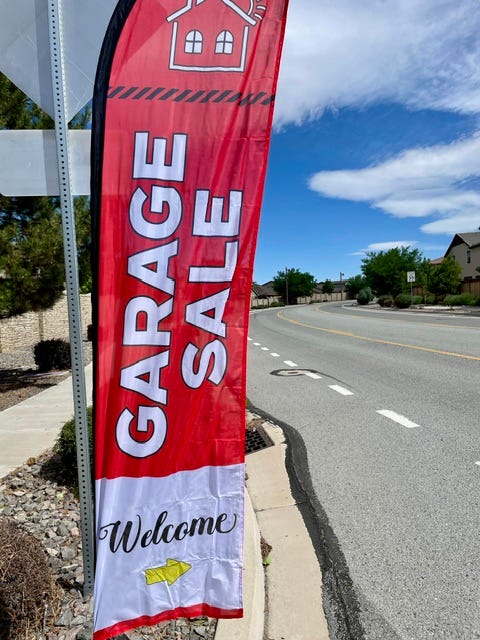
There were other lifestyle details in the States that felt like mini-Christmas mornings. At one of my 15 stops, there was a community yard sale, something I´ve never encountered in Portugal. First of all, people don’t generally have the space or the desire to accumulate quite so much stuff. Secondly, as life in Portugal over the past three years has demonstrated, if something needs to go, family and friends get first dibs, then perhaps Facebook Marketplace, or the unspoken location where household items often end up: the neighborhood trash bins where on any given day you may find clothing, a side table, or misbehaved spouses waiting for a new home. There was something wonderfully relaxing about strolling around an American track-home neighborhood, gawking at used baby items, CDs from the ’80s, and boxes of tools that some poor husband was being forced to depart with by an overbearing wife.
Then there are the public toilets in the United States, which are free and include such luxuries as actual toilet seats. The “quad squat” has become a well-honed skill in Portuguese bathrooms at the high school, restaurants, bus stations, and yes, even the local hospital, where a missing toilet seat is apparently as common as snow in Alaska. But the real opulence of American public toilets is the beloved paper seat cover. There was a certain pleasure in gently whisking up, then down, a tissue-thin seat cover and letting it flutter onto the cold, sterile seat. For a moment, I felt like a queen—and didn’t care if there were 40 women standing in line for two stalls. It was heaven, something that required care from this foreigner. Who knew disposable bathroom seat covers could become a luxury experience for my tail end?
As always, laundry was an adventure, as I wouldn’t know what to do with a clothes dryer. After years of European appliances, the American washing machines seemed less like household appliances and more like spacecraft. They sang songs when they completed the cycle and offered 148 different settings to clean your sheets. A few washers were so large that retrieving a pair of socks glued to the side from a jet-powered spin cycle required climbing onto the machine itself, legs dangling in the air. These washers were so large I could have moved in. Apparently, my European washer—with its limited options and clear buzz sound—and I have been living a very simple, underachieving life.
Yup, becoming a line-dry-clothing lady happened somewhere along the way, although both countries appear to share one curious cultural aversion: the steam iron. People would rather stroll around looking like crumpled café napkins than pull out the ol’ steam iron. There are few things more gratifying than transforming a wrinkled shirt into something that looks like it stepped off a Vogue photo shoot. I stand in defense of the trusty iron.
In addition to some sticker shock, like a $23 hamburger or $4.50 to get one piece of paper copied—in black and white—some items like gas were still cheaper in the US than in Portugal. There remains a firm commitment to never, ever, like ever owning another vehicle. Yet, walking everywhere in the US is not exactly a seamless proposition. After a couple of weeks in the US, one morning Apple Health popped up with a notification: “It looks like your daily walking activity has decreased.” The daily steps graph looked like the body had parked its assets on a couch for two weeks, abandoning the average of 7,000+ steps per day in Europe without even trying. It’s worth being mindful of just “jumping in the car” to go somewhere. If it’s under a 20-minute walk, try walking. Your body will thank you, your wallet may thank you, and Apple Health will stop sending you passive-aggressive messages.
Then came American tipping. Early in the visit, a coffee was ordered at the counter, yet my debit card seemed mysteriously unwilling to cooperate. A 12-year-old employee with braces and jet-black hair, who might have benefited from a good wash, said in the most politically correct tone imaginable, “You just have to answer a few questions and the system will move your purchase forward.” My head cocked to the side like a confused poodle. A question was being sought—not four boxes at the bottom of the screen asking 10%, 18%, 25%, or custom. Oh… the tip came the realization. While Mr. Dirty Hair received a gratuity, there was an immediate longing for purchasing in Europe, where, let’s say, lunch is priced at 14.99, and then it’s 14.99. Not 14.99, plus tax, plus tip, plus the emotional burden of deciding whether the teenager who handed you a paper bag deserves 25%. Agh!!!
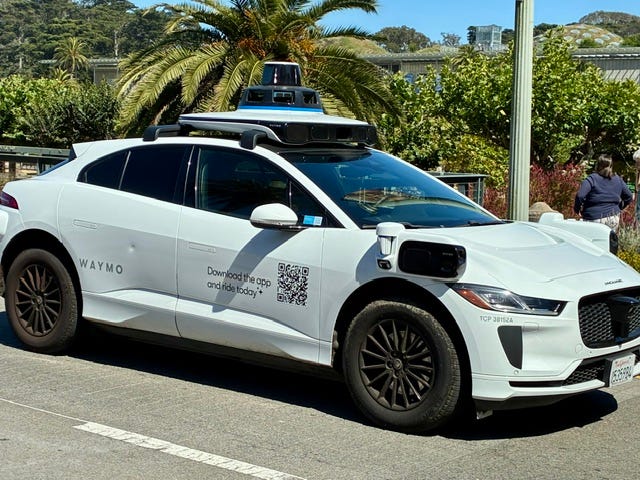
When traveling in San Francisco in 2025, the novelty of an autonomous vehicle was delightful. Seeing a Waymo glide down the street—minus humans—was sexy and a little unnerving. One short year later, Waymos were seemingly everywhere, along with Zoox and Cruise. Do they actually pay college graduates to come up with these names? Now they are as normal as Taco Tuesday. The experience of returning to an increasingly automated world can make even a reasonably competent adult feel like a country bumpkin, wondering how anyone is supposed to keep up with all these inventions in the decades to come. At this rate, my only hope is that the future robot knows how to make my coffee and doesn’t ask for a tip.
Since leaving the US, television has completely disappeared from daily life. Returning to the States brought prescription drug and accident-and-injury lawyer commercials roaring back into consciousness. Plus, my phone became an overnight superstar as it rang repeatedly with spam callers. What, do they zap your phone from a satellite when you step out of the airport? It was both agitating and strangely clarifying, a reminder of what daily life had once included: TV commercials, junk calls, and relentless invitations to buy something every six minutes. Apparently, the absence of aggressive marketing had become one of those European luxuries that went unnoticed until I was gone.
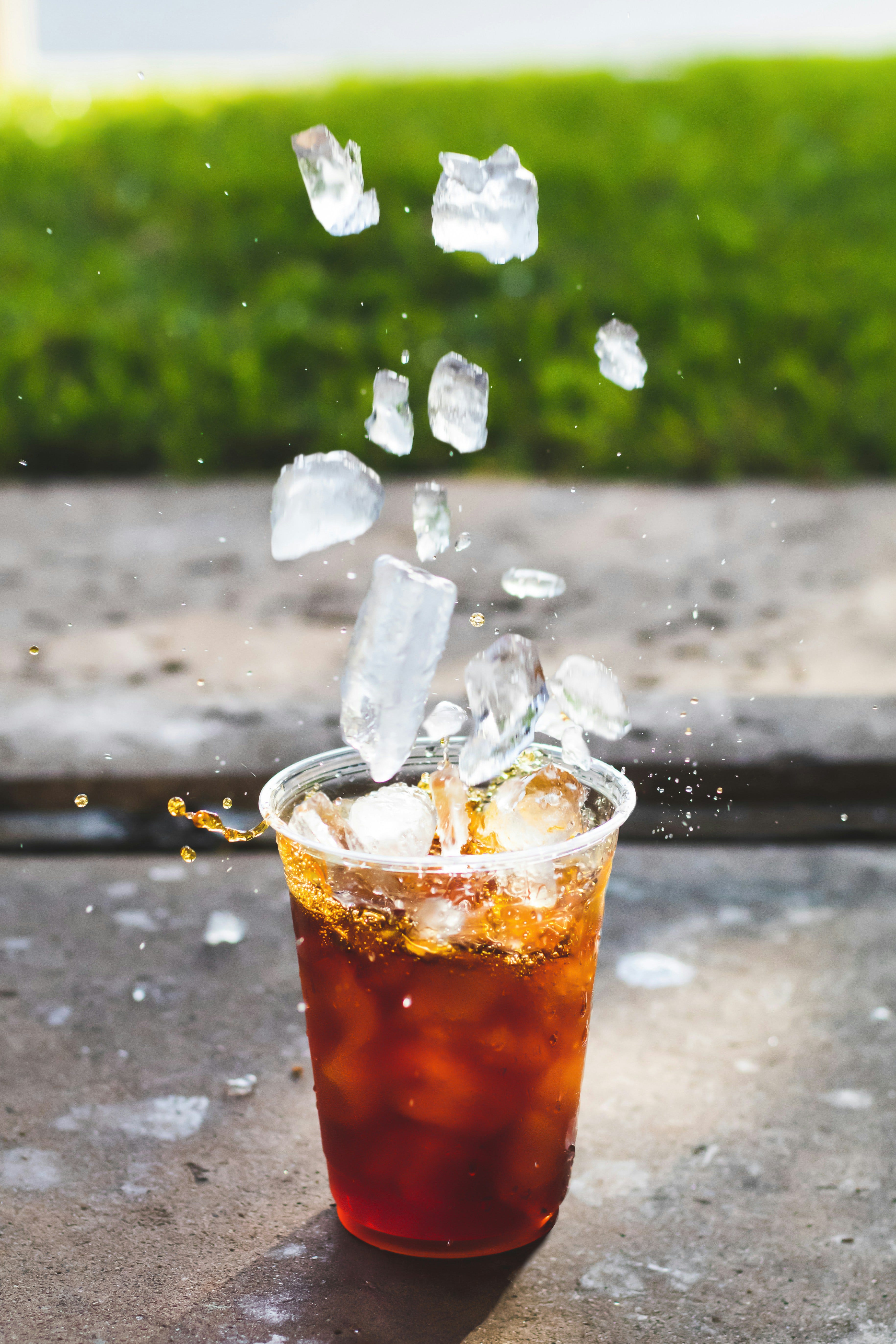
There is, however, one thing the United States continues to do extraordinarily well: food. The diversity of cuisine was deeply missed and thoroughly enjoyed—emphasis on enjoyed. Multiple cultures and simplicity appeared on plates and at your fingertips. Fresh white corn? Delicious. Meaty dark cherries? Scrumptious. But one simple item produced a smile every time: a cold glass of brewed iced tea. What a treat to sip an earthy glass of iced tea in a restaurant—with free refills. Some things are apparently worth crossing an ocean for.
In addition to spending time with friends and family and caring for cheeky little kitties, the real treat was twofold. First, there was the opportunity to vote in the primary elections. Never a civic privilege to be taken for granted, especially since living abroad as a foreign resident means not having the ability to participate in European elections. A few late nights of research and deliberation were a small price to pay. Secondly was going to church. Just normal church, in ENGLISH, where worship could happen alongside like-minded people. It fed the soul.
Those moments were reminders that “home” isn’t simply a geographical location. It can be people. It can be traditions, memories, food, faith, or the comfort of knowing exactly where the bathroom is. Sometimes home is a cold glass of iced tea. Sometimes it is sitting around a table with people who knew you when all this international stuff was merely a dream shared around glasses of Malbec.
As always, part of the fun of traveling is to deep-dive into a culture and embrace—even laugh at—the differences. But returning to the familiar as a visitor sheds new light on just how quickly everyday life in your native country can fade from memory—like the poor Walmart security guard. We let go only to appreciate again. We see, with fresh eyes, all the beauty that originally drew us to a place. We feel out of place. And somewhere in between the $23 hamburgers, autonomous cars, and 62-setting washing machines, something important becomes clear:
We have changed.
Maybe that is the strangest part of returning “home.” You expect the place to have changed while you were gone, but you don’t always realize how much you have changed. You can still navigate the streets, remember the shortcuts, vote, worship, hug old friends, and laugh at the same family stories. Yet somewhere along the way, your definition of normal has expanded. You carry pieces of other places with you now. You feel your foreignness.
So, as you travel and explore new places, don’t be surprised if, upon returning, you feel like a fish outta wahduh. That’s good news. It means you’ve grown. You’ve expanded your horizons. You’ve collected new ways of living, and probably using public toilets. You may no longer completely belong to the place you left. And that can be both bittersweet and beautiful.
Because perhaps the goal of travel isn’t to find a new home or abandon the old one. Maybe it’s to become spacious enough inside yourself to carry more than one home with you. So, what cultural differences will France greet me with in three weeks? I can only imagine.